Top 10 Organic Chemistry Breakthroughs of 2025
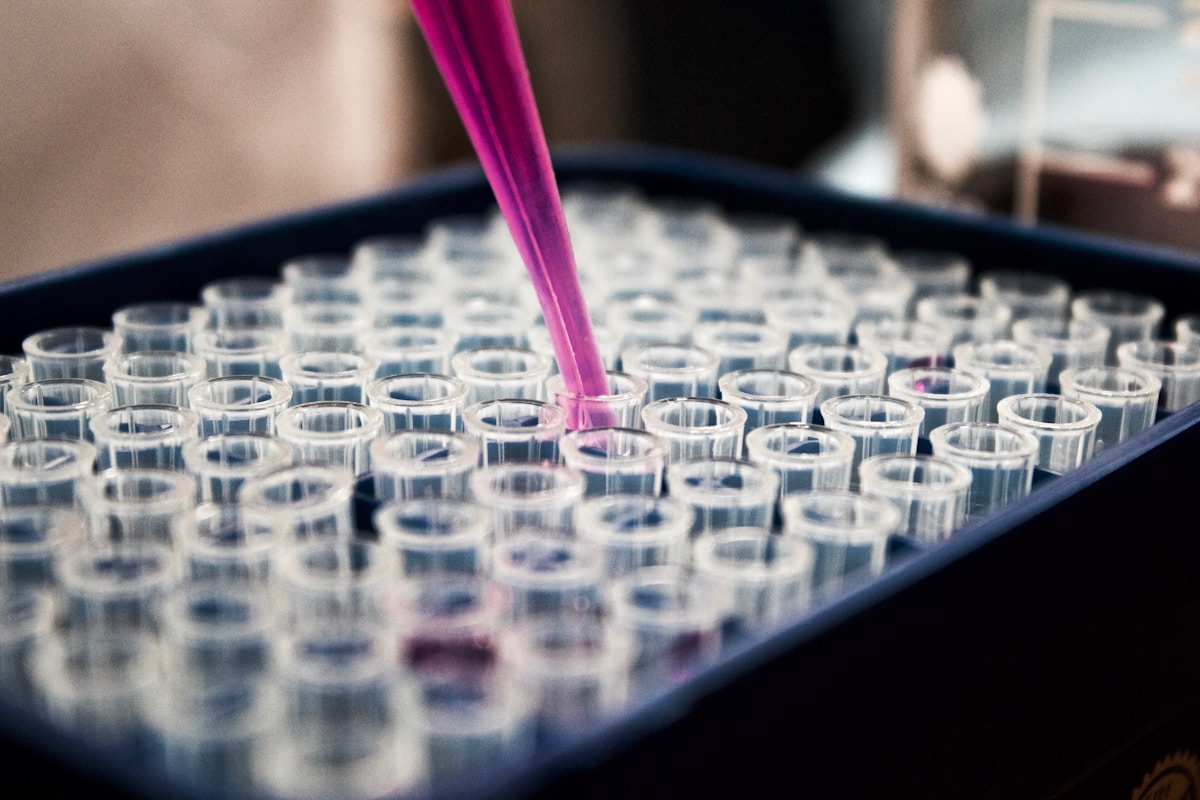
As we approach the end of 2025, the field of organic chemistry has witnessed remarkable advances that are reshaping how we design molecules, synthesize pharmaceuticals, and address global challenges. From revolutionary metal-organic frameworks that earned the Nobel Prize to groundbreaking skeletal editing techniques, this year has been transformative. Here are the top 10 organic chemistry breakthroughs of 2025.
1. Nobel Prize: Metal-Organic Frameworks Revolution
The 2025 Nobel Prize in Chemistry recognized Susumu Kitagawa, Richard Robson, and Omar Yaghi for their pioneering work in developing metal-organic frameworks (MOFs). These crystalline materials feature metal ions connected by organic molecules, creating structures with large cavities that can capture and store specific substances.
💡 Key Innovation
MOFs can harvest water from desert air, capture carbon dioxide, store toxic gases, and catalyze chemical reactions with unprecedented selectivity.
In 1998, Yaghi and coworkers demonstrated that a framework based on $\ce{Zn^{II}}$ and 1,4-benzenedicarboxylate displayed permanent microporosity with specific surface areas of approximately 300 m²/g. This breakthrough opened the door to designing porous materials with tailored properties for gas storage, separation, and catalysis.
Nobel Committee for Chemistry (2025). "Metal-Organic Frameworks." Scientific Background to the Nobel Prize in Chemistry 2025. The Royal Swedish Academy of Sciences.
2. Skeletal Editing: The Cut-and-Paste Chemistry Revolution
Skeletal editing emerged as one of the hottest trends in organic chemistry this year, enabling chemists to insert, delete, or swap single atoms within complex molecular frameworks. This "molecular surgery" allows researchers to fine-tune drug candidates without rebuilding molecules from scratch.
Mark Levin at the University of Chicago and Richmond Sarpong at UC Berkeley coined the term and pioneered methods for these transformations. In 2025, numerous groups reported breakthroughs in nitrogen insertion, carbon deletion, and atom swapping reactions.
Impact on Drug Discovery
Skeletal editing could save weeks of synthetic effort in pharmaceutical development by allowing direct modification of molecular cores to optimize biological activity.
One notable advance came from Indrajeet Sharma's group at the University of Oklahoma, who published methods for nitrogen and carbon insertion into pyrroles, indoles, and imidazoles. This work is now being applied to DNA-encoded library drug discovery in collaboration with Baylor University.
Sharma, R., et al. (2025). "Remodelling molecular frameworks via atom-level surgery: recent advances in skeletal editing of (hetero)cycles." Organic Chemistry Frontiers. DOI: 10.1039/D4QO02157F
3. Copper-Catalyzed C5-H Functionalization of Indoles
Researchers at Chiba University achieved a major breakthrough in indole chemistry by developing a copper-catalyzed method for selective C5-H alkylation. Led by Associate Professor Shingo Harada, the team achieved yields up to 91% using an affordable copper-silver catalyst system.
Indole Core Structure
The reaction uses highly reactive carbenes and operates through a unique C4-C5 rearrangement mechanism:
$$\ce{Indole + Carbene ->[Cu(OAc)2·H2O/AgSbF6] C5-Alkylated Product}$$
📝 Significance
Since 2015, the FDA has approved 14 indole-based drugs for conditions including migraines, infections, and hypertension. This new method provides a cost-effective route to modify these important pharmaceutical scaffolds.
Isono, T., Harada, S., Yanagawa, M., & Nemoto, T. (2025). "Copper-catalyzed direct regioselective C5–H alkylation reactions of functionalized indoles with α-diazomalonates." Chemical Science, 16(33), 14967. DOI: 10.1039/D5SC03417E
4. Hypervalent Iodine: Green Chemistry's New Champion
A comprehensive review by Professors Toshifumi Dohi and Yasuyuki Kita from Ritsumeikan University highlighted the transformative potential of hypervalent iodine-mediated coupling reactions as sustainable alternatives to traditional transition metal catalysis.
By manipulating the oxidation state of iodine atoms, researchers can generate aryl cation-like species, radicals, and aryne precursors that facilitate selective bond formation without relying on costly rare metal catalysts.
Traditional Methods
- Expensive Pd, Pt catalysts
- Metal waste generation
- Lower atom economy
Hypervalent Iodine
- Earth-abundant iodine
- Reduced waste
- High selectivity
Dohi, T., & Kita, Y. (2025). "Iodoarene Activation: Take a Leap Forward toward Green and Sustainable Transformations." Chemical Reviews, 125(6). DOI: 10.1021/acs.chemrev
5. Semi-Artificial Leaf: CO₂ to Fuel Conversion
Cambridge researchers led by Professor Erwin Reisner developed a revolutionary "artificial leaf" that combines organic semiconductors with bacterial enzymes to convert sunlight, water, and $\ce{CO2}$ into formate—a clean fuel for chemical synthesis.
This biohybrid device represents the first use of organic semiconductors as the light-capturing component in such systems, offering a non-toxic, tunable alternative to traditional photocatalysts.
The key reactions are:
$$\ce{2H2O ->[h\nu] 2H2 + O2}$$
$$\ce{CO2 + 2H+ + 2e- -> HCOO-}$$
⚠️ Industrial Impact
The chemical industry produces approximately 6% of global carbon emissions. This technology could help "de-fossilize" chemical manufacturing.
Yeung, C.W.S., et al. (2025). "Semi-artificial leaf interfacing organic semiconductors and enzymes for solar chemical synthesis." Joule. DOI: 10.1016/j.joule.2025.102165
6. Iron Photocatalysis: Concurrent CO₂ Reduction and Organic Synthesis
Chinese researchers reported a groundbreaking iron(II) molecular photocatalyst that independently executes $\ce{CO2}$ reduction without requiring separate photosensitizers—a long-standing challenge in the field.
The polypyridyl iron complex $\ce{FePAbipyBn}$ achieved a turnover number (TON) of 3,558 for CO production with selectivity exceeding 99%. More remarkably, it simultaneously facilitates enamine oxidation and $\ce{CO2}$ reduction, producing indoles and CO as value-added products.
$$\ce{CO2 + Enamine ->[Fe^{II} Photocatalyst][h\nu] Indole + CO}$$
First-of-Its-Kind Achievement
This represents the inaugural instance of a photoredox reaction coupling $\ce{CO2}$ reduction with organic synthesis using a single molecular photocatalyst.
Guo, K., et al. (2025). "A Highly Efficient Molecular Iron(II) Photocatalyst for Concurrent CO₂ Reduction and Organic Synthesis." Journal of the American Chemical Society, 147(19), 15942-15946. DOI: 10.1021/jacs.5c01698
7. Transition Metal-Free Coupling Reactions
The movement toward sustainable organic synthesis accelerated in 2025 with numerous reports of transition metal-free coupling methods. These approaches align with green chemistry principles by minimizing waste, reducing reliance on rare metals, and lowering energy consumption.
Key advances included:
- Hypervalent iodine-mediated aryl-aryl couplings
- Organocatalytic C-H functionalization
- Photochemical coupling reactions without metal catalysts
💡 Green Chemistry Metrics
These methods significantly improve atom economy and reduce E-factors (environmental waste factors) compared to traditional palladium-catalyzed cross-couplings.
8. MXenes for Ammonia Synthesis from Air
Researchers explored MXenes—two-dimensional materials—as promising catalysts for transforming air into ammonia for cleaner fertilizers and fuels. These materials offer tunable atomic structures that can be optimized for nitrogen fixation.
The nitrogen reduction reaction proceeds as:
$$\ce{N2 + 6H+ + 6e- -> 2NH3}$$
MXenes provide a more affordable alternative to traditional Haber-Bosch processes and expensive ruthenium catalysts, potentially revolutionizing sustainable ammonia production.
Science Daily (November 2025). "New 2D Material Transforms Air Into Fuel and Fertilizer."
9. Photoelectrocatalytic Fluoroalkylation with Iron
A resource-economic photoelectrocatalysis strategy enabled versatile direct fluoroalkylations catalyzed by earth-abundant iron, paired with the hydrogen evolution reaction (HER). This approach proved amenable to late-stage C-H fluoroalkylations of bio-relevant heterocycles.
The synergistic combination of photoexcitation with electron transfer by anodic oxidation creates unique potential for novel reaction manifolds that go beyond individual photo- or electrochemistry.
📝 Advantages
The method eliminates the need for expensive photocatalysts or stoichiometric chemical oxidants while enabling extreme redox potentials under mild conditions.
Motornov, V., et al. (2025). "Photoelectrochemical Iron(III) Catalysis for Late-Stage C-H Fluoroalkylations." Angewandte Chemie International Edition, 64(25), e202504143. DOI: 10.1002/anie.202504143
10. Molecular Antennas for Lanthanide LED Breakthrough
Cambridge scientists discovered how to electrically power insulating nanoparticles using organic molecules as "molecular antennas." This breakthrough enabled the creation of ultra-pure near-infrared LEDs from lanthanide-doped nanoparticles—previously thought impossible.
The organic antenna molecules trap charge carriers and harvest "dark" molecular triplet excitons, directing electrical energy into the insulating materials. These LEDs generate extremely pure near-infrared light ideal for medical diagnostics and optical communications.
Versatile Platform
The fundamental principle allows exploration of countless combinations of organic molecules and insulating nanomaterials, enabling devices with tailored properties for unimagined applications.
Yu, Z., et al. (2025). "Triplets electrically turn on insulating lanthanide-doped nanoparticles." Nature, 647(8090), 625. DOI: 10.1038/s41586-025-09601-y
Conclusion: A Transformative Year for Organic Chemistry
The breakthroughs of 2025 reflect organic chemistry's evolution toward greater sustainability, precision, and interdisciplinary integration. From Nobel Prize-winning MOFs to molecular surgery techniques, earth-abundant metal catalysis to bio-inspired photosynthesis, these advances are laying the groundwork for next-generation pharmaceuticals, clean energy technologies, and sustainable chemical manufacturing.
💡 Looking Forward
As we move into 2026, the convergence of artificial intelligence with these synthetic methodologies promises to accelerate discovery even further, potentially revolutionizing how we design and synthesize molecules.
The field stands at an exciting crossroads where fundamental discoveries in reactivity meet urgent global challenges in sustainability and healthcare. These top 10 breakthroughs exemplify the creativity, innovation, and problem-solving capacity of the organic chemistry community.
References
The Nobel Committee for Chemistry. (2025). *Scientific background: Metal-organic frameworks*. The Royal Swedish Academy of Sciences.
Sharma, R., Arisawa, M., Takizawa, S., & Salem, M. S. H. (2025). Remodelling molecular frameworks via atom-level surgery: Recent advances in skeletal editing of (hetero)cycles. *Organic Chemistry Frontiers*. https://doi.org/10.1039/D4QO02157F
Isono, T., Harada, S., Yanagawa, M., & Nemoto, T. (2025). Copper-catalyzed direct regioselective C5–H alkylation reactions of functionalized indoles with α-diazomalonates. *Chemical Science, 16*(33), 14967. https://doi.org/10.1039/D5SC03417E
Dohi, T., & Kita, Y. (2025). Iodoarene activation: Take a leap forward toward green and sustainable transformations. *Chemical Reviews, 125*(6), 3440–3550. https://doi.org/10.1021/acs.chemrev.4c00808[1]
Yeung, C. W. S., Liu, Y., Vahey, D. M., et al. (2025). Semi-artificial leaf interfacing organic semiconductors and enzymes for solar chemical synthesis. *Joule*. https://doi.org/10.1016/j.joule.2025.102165
Guo, K., Yang, S., Wang, Y., et al. (2025). A highly efficient molecular iron(II) photocatalyst for concurrent CO₂ reduction and organic synthesis. *Journal of the American Chemical Society, 147*(19), 15942–15946. https://doi.org/10.1021/jacs.5c01698
Motornov, V., Trienes, S., Resta, S., et al. (2025). Photoelectrochemical iron(III) catalysis for late-stage C–H fluoroalkylations. *Angewandte Chemie International Edition, 64*(25), e202504143. https://doi.org/10.1002/anie.202504143
Yu, Z., Deng, Y., Ye, J., et al. (2025). Triplets electrically turn on insulating lanthanide-doped nanoparticles. *Nature, 647*(8090), 625. https://doi.org/10.1038/s41586-025-09601-y
Durrani, J. (2025, December 18). AI continues to make waves and structural editing impresses in 2025. *Chemistry World*. Royal Society of Chemistry. https://www.chemistryworld.com/news/ai-continues-to-make-waves-and-structural-editing-impresses-in-2025/4022665.article
Barbu, B. (2025). Skeletal editing: How close are we to true cut-and-paste chemistry? *Chemical & Engineering News, 103*(7).
Keywords: #OrganicChemistry #GreenChemistry #Photocatalysis #SkeletalEditing #MetalOrganicFrameworks #NobelPrize2025 #SustainableChemistry #DrugDiscovery #Catalysis #MolecularDesign